
The Impact Of Website Speed And Performance On User Engagement And Conversion Rates
We've all done it when it comes to browsing the internet. When you click on a webpage, it loads slowly. To move on to the next option, you do what any frustrated user would do:
you click the back button. Website Speed And Performance are important to you as a user. A lot. We expect websites to load quickly in the fast-paced world of today. And if they don't, well, we'll be gone before you can say "loading."
Yet, Website Speed And Performance are not only important for user experience; it also has a major impact on how well your website performs. Increased bounce rates, decreased engagement, and eventually worse conversion rates can all be a result of slow loading times. Yes, It's true what you heard.
In that case, what can you do to ensure your website speed and performance are up to par? In this article, we'll explore
- Significance of Website Speed And Performance,
- Relationship between loading speed and user experience,
- Impact of slow loading times on engagement and conversion rates,
- Practices for improving website loading speed, and
- Importance of ongoing Website Speed And Performance monitoring and optimization.
So, buckle up, and let's dive into the world of website speed and performance!
Why are Website Speed And Performance important?
The success of your website can be greatly impacted by its loading time, which is essential for user experience. Several factors make webpage loading time so important, including the following:
Conversion

Site speed is of utmost importance to online shoppers in this age of instant gratification. It has been found that faster websites and pages have lower bounce rates and higher conversion rates.
Google claims that a one-second increase in Website Speed And Performance can boost conversions for mobile users by up to 27%. And since 70% of customers make purchases on mobile devices, it is obvious that site speed has a significant impact on your potential revenue. You'll decrease the likelihood that a visitor will leave without making a purchase and boost your chances of making sales by keeping the load time of your page low.
Loyalty (repeat business)
Long-term exposure to slow sites could be much worse than a customer's unfavorable initial impression of your slow website.
You've probably heard the saying, "It costs less to get repeat business from existing clients than it does to acquire new ones." An important factor in this is site speed. Experts discovered that 79% of consumers are less likely to return to an online retailer if they were "dissatisfied" with the site's speed (i.e., if your site is fast, you're more likely to obtain repeat customers).
Invest in lowering load times and boosting page speed across your website today to maintain low customer acquisition expenses in the future.
Google Search ranking
Site speed contributes significantly to rankings in the broader area of search engine optimization in addition to improving user experience.
If your company appears higher in search results on sites like Google, more potential customers will find it. Google, the most popular search engine with a market share of 92.47% as of January 2021, ranks websites according to their speed. As of May 2021, faster websites now rank even higher on Google, making it easier for prospective customers to find them.
Correlation between website loading speed and user experience
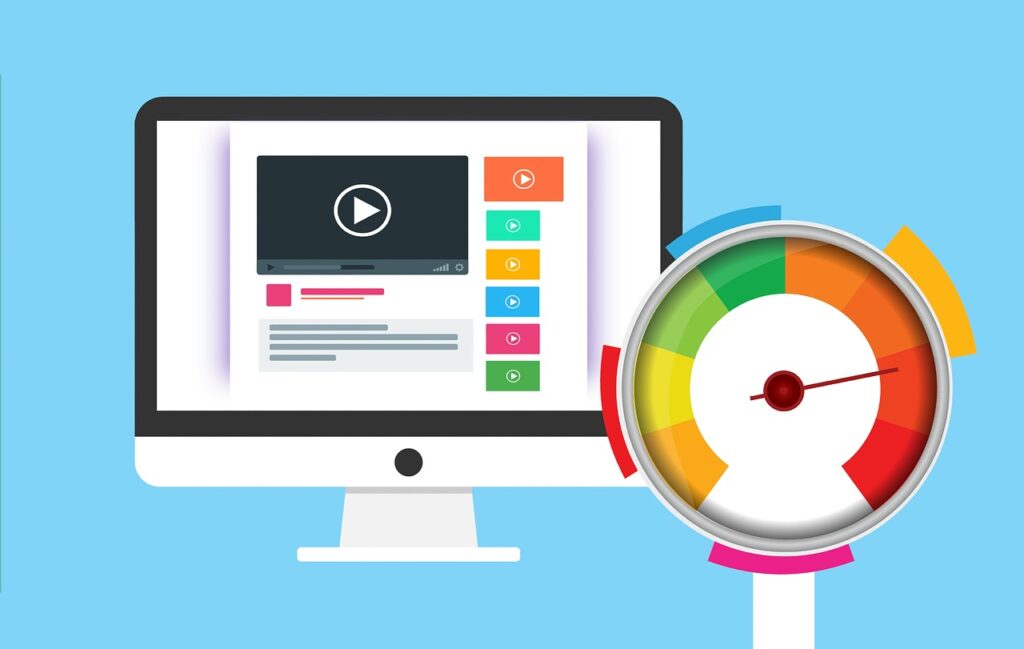
The speed at which a website loads and the user experience are closely related. People expect websites to load swiftly and effectively in the fast-paced world of today. The length of time it takes for a website to load can cause visitors to lose interest and go on to the next one out of irritation and annoyance.
By making it challenging for users to access the information they require, a slow-loading website can also hurt the user experience. For instance, if a website loads slowly, users may not be able to access the goods or services they want, which would negatively impact their user experience.
A quick-loading website, on the other hand, can give users a pleasant and seamless experience. The ease with which visitors can quickly and readily access the information they require makes them more inclined to interact with the website, which increases the possibility that they will make a purchase.
To put it briefly, the success of an internet business is significantly influenced by how quickly a website loads. While a website that loads slowly might make users frustrated and have a bad experience, a website that loads quickly can benefit visitors. Businesses can improve the user experience of their websites and increase the possibility that visitors will make purchases by boosting website loading speed.
Impact of slow loading speed on bounce rates and user engagement
Poor loading times can have a big influence on bounce rates and user engagement. The term "bounce rate" refers to the proportion of visitors to a website who leave after just viewing one page. A high bounce rate is typically a symptom of a poor user experience when users are having trouble discovering what they are looking for or are becoming bored with the website.
Users may become irritated and leave a page if a website takes longer than usual to load, which raises the bounce rate. Internet businesses in particular may be harmed by this situation. The longer it takes for a website to load, the more probable it is that visitors will leave before they can interact with the information.
Along with impacting bounce rates, a slow website loading time can negatively affect user engagement. Users are less likely to interact with a website that loads slowly, and they may leave before learning more about the products or services being offered. This may result in a drop in conversions and overall success for the online business.
To put it succinctly, user engagement and bounce rates can both be severely impacted by a website's bad loading speed. By increasing website loading speed, businesses may enhance the likelihood that visitors will stay on their site and engage with the content. This will ensure that visitors have a positive user experience.
Website loading speed and its influence on Conversion Rate Optimization (CRO)
Website loading speed plays a crucial role in Conversion Rate Optimization (CRO) because it directly affects user experience. Users expect websites to load quickly and will typically abandon a website that takes too long to load. Here are some ways in which website loading speed affects CRO:
User Experience
Website loading speed directly impacts user experience. If a website takes too long to load, users are likely to get frustrated and leave, resulting in a high bounce rate. When users have a positive experience on a website, they are more likely to engage with it, and conversion rates increase.
Search Engine Optimization (SEO)
Website loading speed is a key factor in search engine ranking algorithms. Websites that load faster are typically ranked higher in search engine results pages, leading to increased visibility and traffic. This, in turn, leads to more potential conversions.
Mobile Optimization
Website loading speed is particularly important on mobile devices, where users are often on-the-go and have limited data plans. If a website takes too long to load on a mobile device, users are likely to leave and look for a faster alternative.
Trust
A slow website can create a negative impression on the user, who may view the website as untrustworthy or unreliable. This can result in lower conversion rates and may impact the user's likelihood to return to the website in the future.
How to improve your website loading speed
Improve your site speed by following these steps:
Optimize images
A website can be considerably slowed down by large, high-resolution photos. You can minimize the file size of photographs without compromising on quality by optimizing them for the web, which will make your website load more quickly.
Reduce the number of plugins
A website will probably load more slowly the more plugins it has. The speed at which a website loads can be increased by lowering the number of plugins used.
Use a fast and reliable hosting provider
The hosting provider that you choose can have a major impact on website loading speed. By using a fast and reliable hosting provider, you can ensure that your website loads quickly and efficiently.
Minimize the use of heavy scripts
A website's load time can be accelerated by reducing the amount of code on the page. This can be accomplished by using minification tools, which eliminate superfluous characters from code to reduce its size and speed up loading.
Use a CDN
For users who are farther away from the primary server, a CDN can assist distribute website content over numerous servers, speeding up their load time.
Regularly evaluate and improve Website Speed And Performance
It is necessary to keep a website's page load time low. By routinely analyzing Website Speed And Performance, you may find any problems and make the required adjustments to speed up website loading.
The importance of continual Website Speed And Performance monitoring and optimization
Continual Website Speed And Performance monitoring and optimization are crucial for the success of any online business. Your website is the digital face of your brand, and a slow or poorly-performing website can leave a negative impression on your visitors, resulting in lost business opportunities.
Performance monitoring allows you to identify any issues that may be affecting your website's speed, security, and functionality, and take corrective actions promptly. This not only helps improve the user experience but also enhances the overall performance of your website, leading to increased conversions and revenue.
Optimization involves implementing changes to your website to improve its performance, such as optimizing images and videos, compressing large files, and reducing server response time. Continual optimization ensures that your website is up-to-date with the latest best practices and technologies, keeping it competitive in the digital landscape.
In conclusion, continual Website Speed And Performance monitoring and optimization are vital to ensuring your website's success. By regularly analyzing and optimizing your website's performance, you can provide your users with a seamless experience, gain a competitive edge, and ultimately drive business growth.
Final words
Summing up, the success of a website is greatly influenced by its loading time. It impacts not only the user experience but also the website's search engine positioning, conversion rates, and bounce rates. Businesses should prioritize focusing on Website Speed And Performance as a crucial element of their overall digital strategy to make sure that their website is quick and effective, offering a seamless user experience, and increasing conversions. Companies can reduce the time it takes for their website to load by putting the aforementioned optimizations into practice, which will increase user engagement and conversion rates.
We at DianApps are aware of the significance of optimizing website performance and speed. As a top provider of a website development company, our team focuses on offering our customers the best website optimization and SEO services. To find out how we can help you increase the performance and speed of your website and grow your business, get in touch with us right away for your web development service requirements. Let's collaborate to make a website that stands out from the competition!